Kudoswap
An influencer platform built on a decentralised exchange, where the launch campaign was the first version of the product.
Scope: Product Design, Mechanics, Brand, Campaign
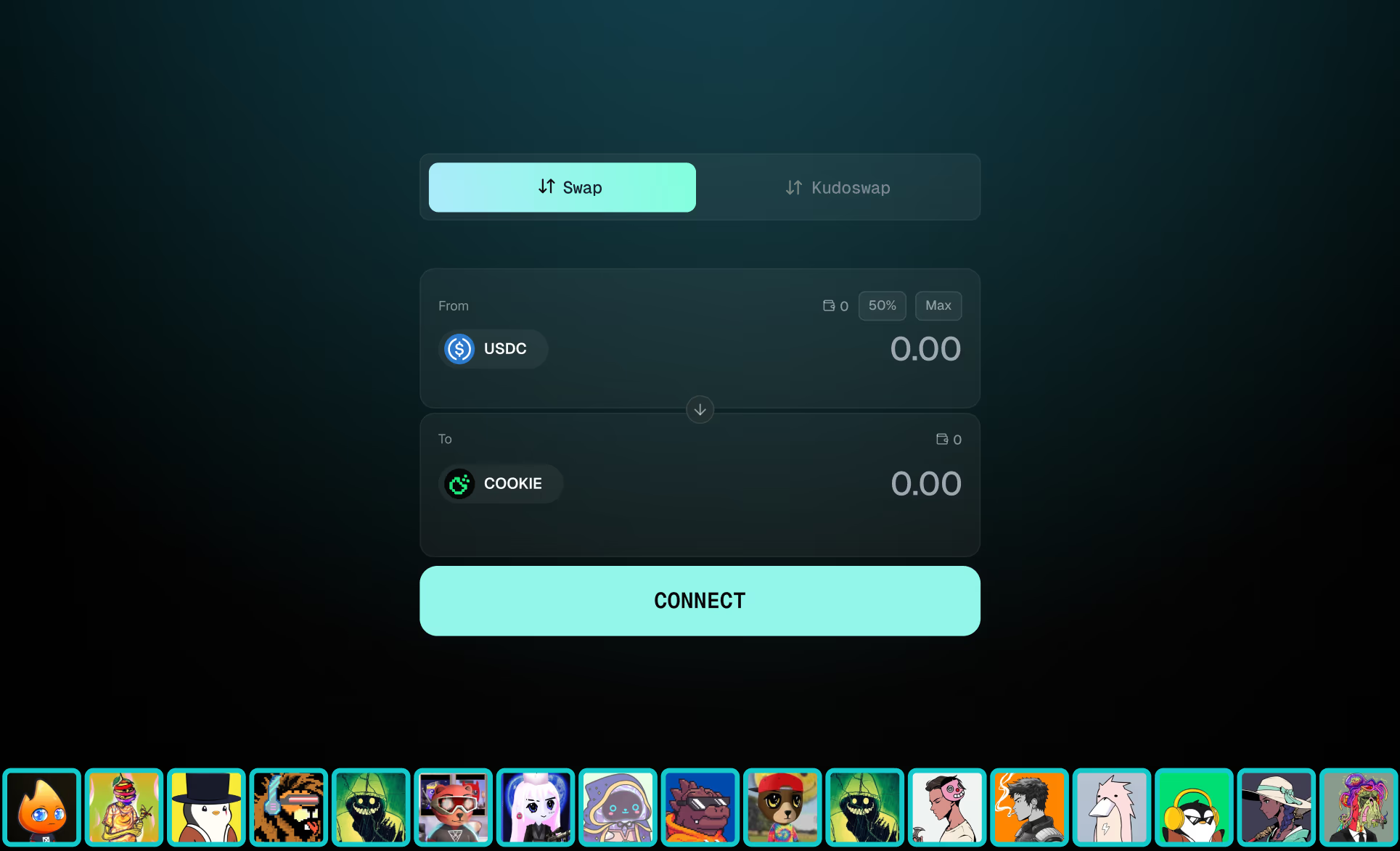
What was Kudoswap
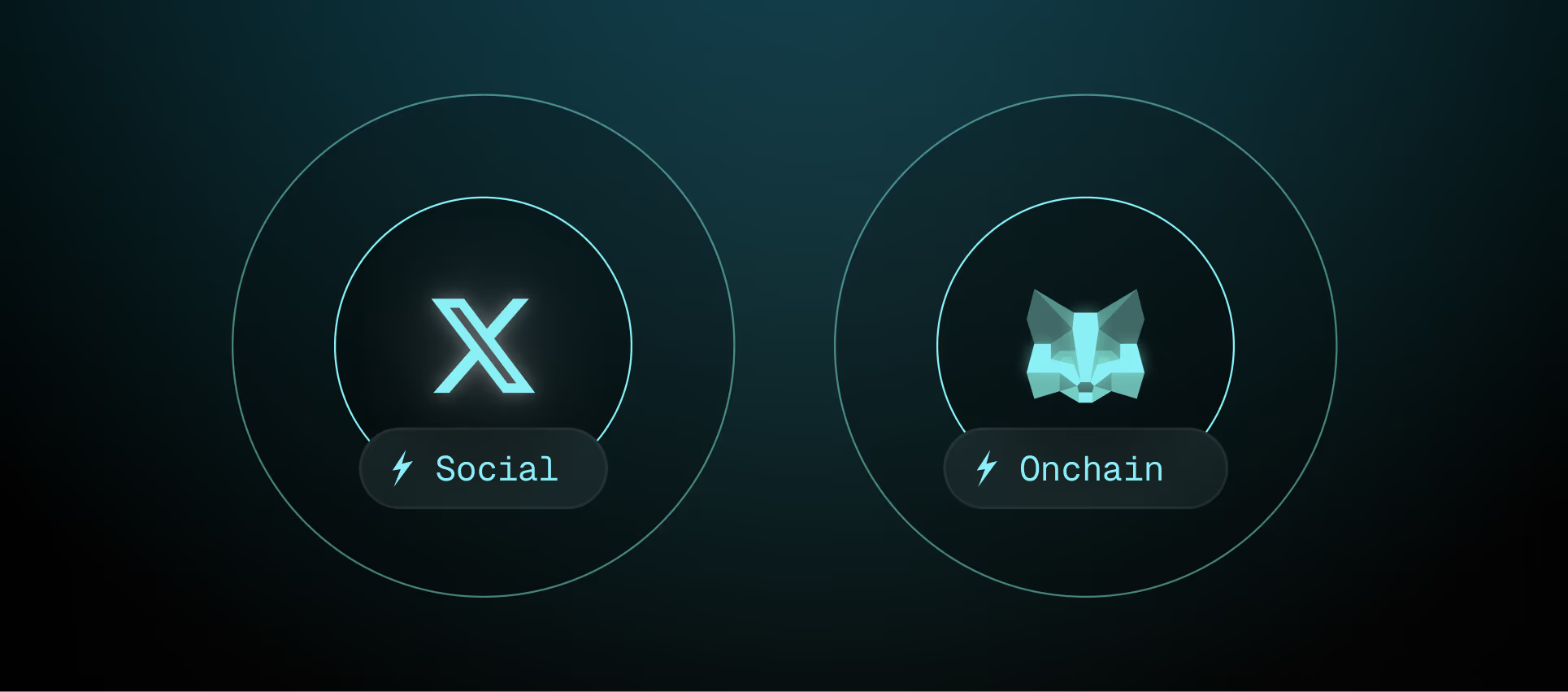
An influencer platform built on a decentralised exchange. It let influencers and whales contribute their reputation, earned socially or on-chain, to a project, and share in that project's reward pool in proportion to what they brought.
We designed and shipped it inside the InfoFi boom, and launched it to 50K signups in 48 hours.
The challenge
The InfoFi window was open and cresting. That set the terms: move fast enough to catch the wave while it was still building, or arrive late as a me-too.
Underneath the timing sat a real, structural problem. Projects were pouring budget into influencer reach and getting noise back: flat fees paid upfront, with no line connecting the hype to anything real on-chain. Nothing tied what an influencer was paid to what they actually contributed, and nothing gave the project a return it could measure.
So the brief wasn't “run a campaign.” It was this: build the thing that turns influence into measurable on-chain activity, and turns influencer spend into something a project can account for.
The approach

Three decisions shaped everything that followed.
Pay for contribution, not upfront. Influencers earned in proportion to what they actually brought in, not a flat fee paid in advance. It was the pay-for-performance model InfoFi had opened: performance for the project, upside for the contributor, on the same rail.
Compete on participation, not fees. Most DEXs race on liquidity and fees, a commoditised fight. Kudoswap wrapped a reward layer around the exchange instead, so ordinary usage became a game worth playing rather than a cost to minimise.
Design brand, product and mechanic as one thing. “Kudos” was the name, the message and the mechanic at once: reputation you gave, earned and spent. It was built to travel through a campaign, not to sit on a landing page. (Brand was part of the original engagement; BuildOS today focuses mainly on the product surface.)
The insight
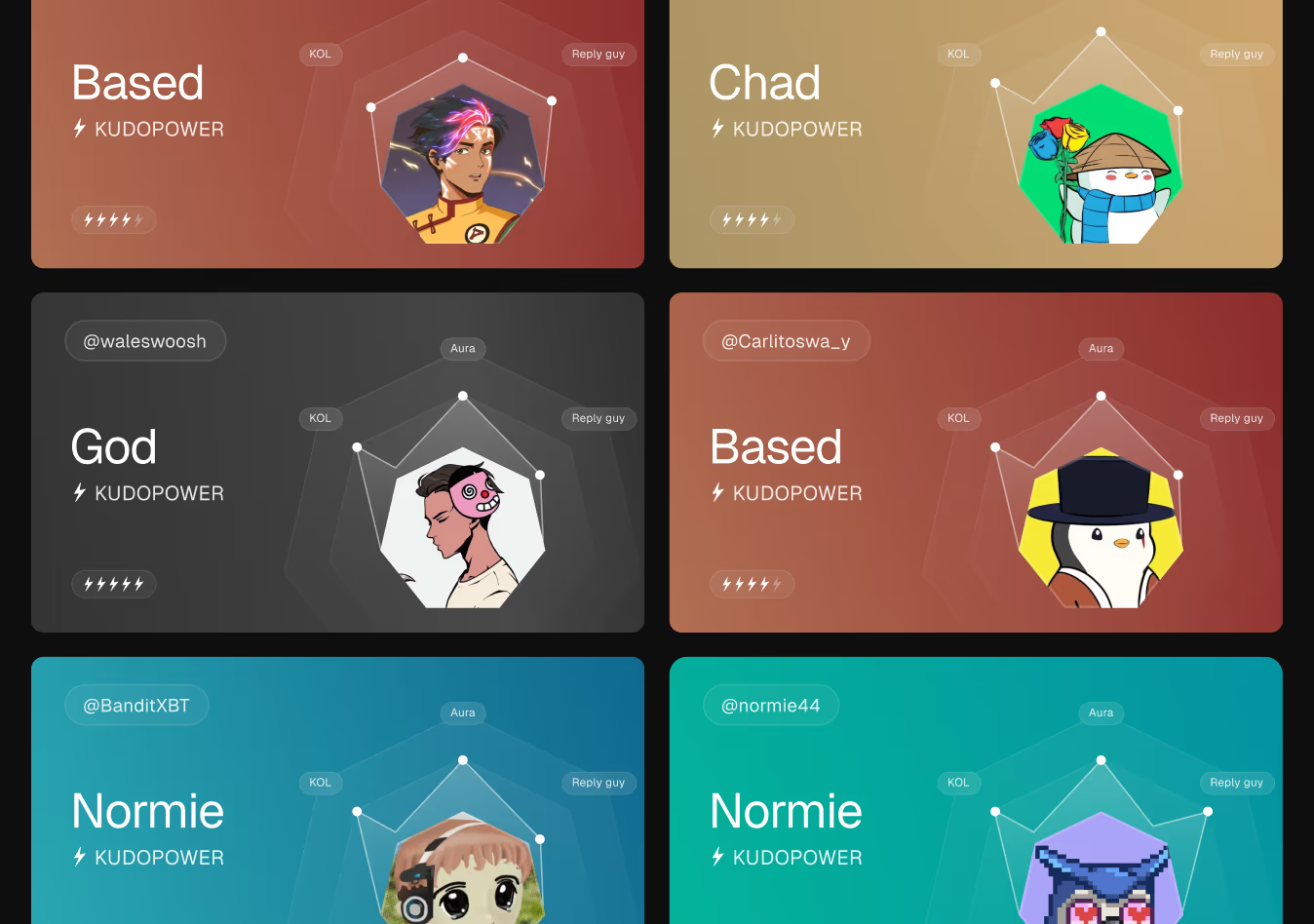
The move most people miss when they look at Kudoswap: the campaign wasn't marketing pointed at the product. It was the product's first version.
The v1 mechanic was a game of collecting Kudos. You revealed your card, your influence scored against a standard and rendered as a spider-web of your metrics, and sharing it was the action. Reveal, share, collect, every share pulling the next person in to reveal their own.
The first playable surface of the product and its growth loop were the same object. Using it was sharing it, so distribution wasn't bolted on afterwards, it was the mechanic. That's why it moved the way it did, and why it cost so little to move it.
The product
Beneath the launch sat a real on-chain product, built around two ideas.
Boosted swaps that doubled as revenue. Contribution translated into an outsized, earned discount: swap 20 USDC for $1,000 of a token, a 98% discount and a 50× position. Two things happened in one transaction. The influencer got a result worth advertising, since “I turned 20 into 1,000” shares itself, and the discounted swap doubled as revenue for the project hosting the pool. A giveaway costs a project money and buys noise. This turned the reward into a swap the project earned from, and the swap into a story influencers spread for free.
One connected on-chain loop. Swapping, challenges and rewards were designed as a single loop rather than separate features: challenges the action layer of the exchange, reward campaigns turning participation into progress, and the Kudos card giving all of it a reason to be shared. Every part fed the next.
The result

50K users in 24 hours. 20K followers within days. Sustained attention across X. Around $50K in influencer value against roughly $6.5K in spend, a fraction of conventional acquisition cost.
It proved the thesis cleanly. A product and a mechanic designed together, where the campaign is the v1 and the reward is the revenue, convert social capital into on-chain results with unusual capital efficiency. The DEX was the vehicle. The mechanic was the point, and the method is the part that transfers.
Discover what's holding your product back.
A focused read of what's making your product read as early, and what to fix first.
Book a call